
Background of Septal Perforation
A septal perforation is an opening through the nasal septum — the structure that separates the left and right sides of the nasal cavity.
Understanding the normal septum, how a perforation develops and how it changes airflow helps explain why symptoms vary so much between patients.
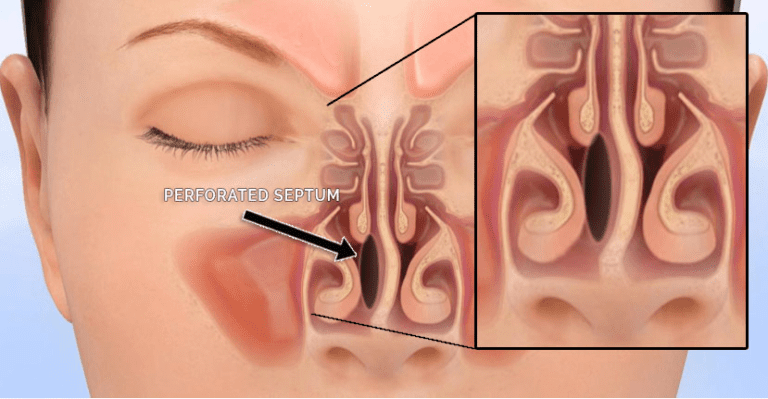
A septal perforation creates communication between the two sides of the nasal cavity.
Why the Nasal Septum Matters
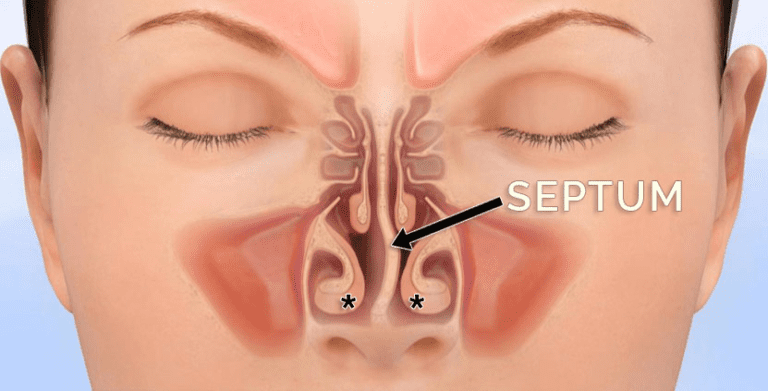
The nasal septum is more than a simple wall between the nostrils. It helps divide the nose into two passages and forms part of the structural and functional framework of the nasal cavity.
When an opening develops through the septum, air can pass between the two nasal passages in a way that does not normally occur. The resulting change in airflow helps explain many of the symptoms associated with septal perforation.
What Is the Nasal Septum?
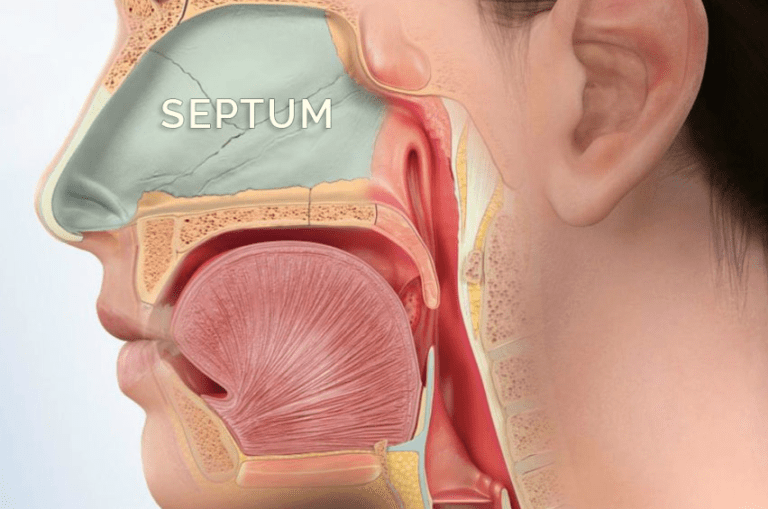
The septum separates the left nasal cavity from the right. Its supporting framework includes cartilage towards the front and bone further back.
Both sides of this framework are covered by a living mucosal lining. This lining has an important blood supply that supports the tissue beneath it.
Soft living tissue covers each side of the septal framework.
Cartilage forms an important part of the front portion of the septum.
Bony structures contribute to the deeper and posterior septum.
What Exactly Is a Septal Perforation?
A perforation is a full-thickness opening through the nasal septum rather than simply thinning or bending of the septal structure.
Two Separate Nasal Passages
In the normal nose, the septum separates the airflow passing through the left and right sides.
An Opening Between Both Sides
A full-thickness defect allows airflow to pass through the septum from one nasal cavity into the other.
A Deviated Septum
A deviated septum is displaced or curved. A perforated septum has an actual opening through its tissue.
Septal perforations are commonly found in the anterior cartilaginous portion of the septum, but the exact position varies between patients.
The Health of the Septal Lining Is Important
The cartilage of the septum depends on the tissues covering it for its nutritional support and blood-supply relationship.
Injury, surgery, inflammation, chemical exposure or other disease processes can damage this protective tissue. When tissue viability is sufficiently affected on both sides, a full-thickness defect may develop.
Explore the causes of septal perforation →The mucosal lining or its blood supply is damaged.
The underlying septal tissues may lose the support needed to remain healthy.
An opening can ultimately form between the two sides of the nasal cavity.
Why Can a Small Opening Cause Noticeable Symptoms?
Air normally travels through each side of the nose along the nasal passages. A perforation changes that pattern by allowing air to move through the septum.
This altered airflow can become turbulent around the edges of the opening. Turbulence can increase drying of the nasal lining and contribute to crusting, irritation and bleeding.
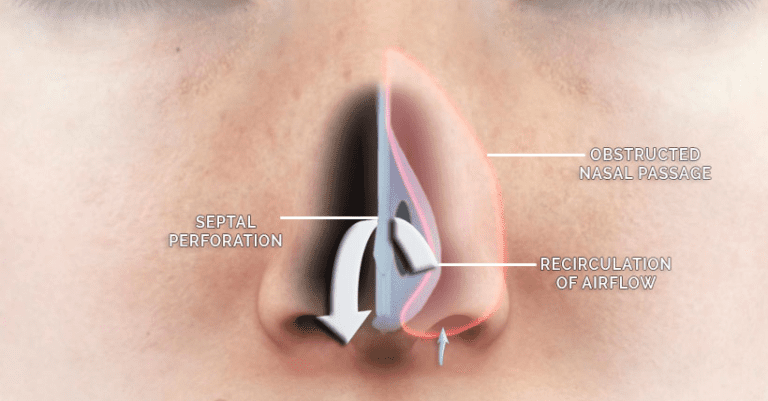
Altered airflow can help explain why a patient may feel obstructed despite having an opening in the septum.
Size Is Important — But It Is Not the Whole Story
Two people with perforations of similar dimensions can experience very different symptoms. Assessment therefore considers more than diameter alone.
Size
The horizontal and vertical dimensions help describe the defect and may influence management options.
Position
Anterior and posterior perforations can behave differently because nasal airflow is not uniform throughout the nose.
Tissue Health
Healthy surrounding mucosa is important when considering both symptom control and possible reconstructive treatment.
Underlying Cause
Treatment planning should consider why the perforation developed, particularly where the cause remains uncertain.
Previous Surgery
Previous septal or nasal surgery can change the available tissue and influence future treatment options.
Symptoms
The impact on the patient matters. Management is guided partly by how troublesome the condition actually is.
Does a Septal Perforation Always Get Worse?
No. A perforation does not inevitably enlarge or lead to structural change.
Some perforations can remain stable for long periods, particularly where the underlying cause has been addressed and the nasal lining is kept healthy.
Other perforations may change over time depending on factors such as continuing tissue injury, chronic crusting, inflammation, manipulation or an untreated underlying condition.
The Septum Also Contributes to Nasal Structure
The septal framework contributes to support within the nose. For this reason, clinicians assess not only the opening itself but also the surrounding cartilage and overall nasal structure.
Structural weakening is not inevitable. It is more relevant in selected larger or complex defects and where substantial supporting tissue has been lost.
Understand potential complications →What Will the ENT Surgeon Consider?
- Size and position of the perforation
- Condition of surrounding mucosa
- Crusting, bleeding and inflammation
- Previous nasal operations
- Septal and external nasal support
- Possible underlying cause
Understand the Condition Step by Step
Background is only the starting point. The next pages explore why perforations develop, how they can present and how they are assessed and managed.
Causes
Surgery, trauma, intranasal exposure, inflammatory disease and other causes.
Explore causes → 02 Patient ExperienceSymptoms
Whistling, crusting, bleeding, irritation and altered nasal airflow.
Explore symptoms → 03 What Can ChangeComplications
Persistent symptoms, enlargement and structural issues in selected cases.
Understand complications → 04 AssessmentDiagnosis
History, examination, nasal endoscopy and further investigation where appropriate.
Understand diagnosis → 05 ManagementTreatment Options
Symptom management, septal buttons, surgical repair and revision treatment.
Explore treatments →Consider ENT Assessment if Symptoms Persist
A specialist assessment can help confirm whether a perforation is present, assess its characteristics and consider why it developed.

Mr Hassan Elhassan
Consultant ENT, Rhinology & Nasal Surgeon
Assessment of septal perforation involves more than simply measuring the opening. Symptoms, previous surgery, tissue health, structural support and the likely cause all contribute to individual treatment planning.
The information on this page explains septal perforation in general terms. An individual diagnosis or treatment recommendation requires appropriate clinical assessment.
Next: Understand What Causes Septal Perforation
Explore the different medical, surgical, traumatic and exposure-related causes and why identifying the underlying cause can matter.